Unlocking the World of Mutual Insurance
Diving into the realm of mutual insurance, this exploration promises a journey filled with insights and revelations. From the inner workings of mutual insurance companies to the benefits reaped by policyholders, get ready to uncover the secrets of this unique insurance model.
As we delve deeper into the intricacies of mutual insurance, a world of financial stability, risk management, and unparalleled customer experiences awaits your discovery.
Overview of Mutual Insurance
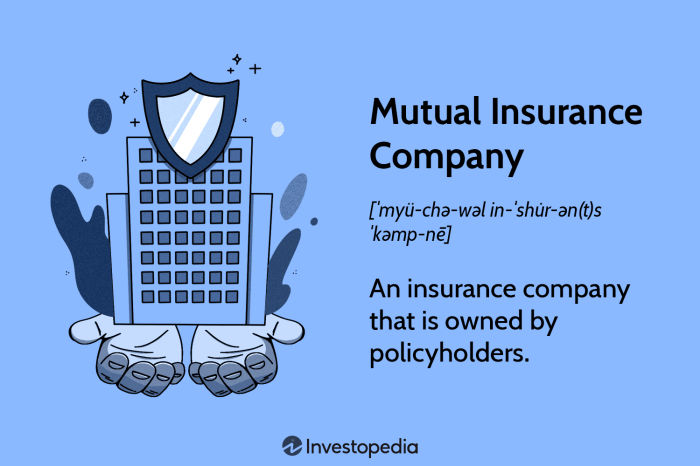
Mutual insurance is a type of insurance company owned entirely by its policyholders. These policyholders are also the ones who receive any profits made by the company in the form of dividends or reduced premiums. Mutual insurance companies operate on the principle of shared risk, where policyholders come together to protect each other from financial losses.
How Mutual Insurance Companies Operate
Mutual insurance companies are structured in a way that puts policyholders at the center of decision-making. Policyholders have voting rights and elect a board of directors to oversee the company's operations. These companies do not have shareholders looking to make a profit, allowing them to focus solely on serving the best interests of their policyholders.
- Policyholders pool their premiums to create a fund that is used to pay out claims.
- Surplus funds are either distributed back to policyholders as dividends or reinvested to strengthen the company's financial position.
- Policyholders have a say in the company's operations through voting rights and participation in annual meetings.
Examples of Mutual Insurance Companies
- State Farm Mutual Automobile Insurance Company
- Amica Mutual Insurance Company
- Nationwide Mutual Insurance Company
Benefits of Mutual Insurance
Mutual insurance offers several advantages over other types of insurance, providing unique benefits to policyholders. Here's how policyholders can benefit from choosing mutual insurance and how it compares to traditional insurance models.
Financial Stability and Control
- Policyholders have a stake in the company and are considered members, allowing them to have a say in decision-making processes.
- Profits are shared among policyholders in the form of dividends or premium refunds, ensuring financial stability and control over their insurance.
- Unlike traditional insurance companies that focus on maximizing profits for shareholders, mutual insurance companies prioritize the needs and interests of policyholders.
Customer-Centric Approach
- Mutual insurance companies are known for their customer-centric approach, focusing on providing personalized service and meeting the unique needs of policyholders.
- Policyholders often have direct access to decision-makers and customer service representatives, fostering a strong relationship between the company and its members.
- Claims processing and dispute resolution are handled efficiently, prioritizing the satisfaction of policyholders over profit margins.
Long-Term Benefits and Stability
- Policyholders of mutual insurance companies benefit from long-term relationships, as these companies prioritize retention and loyalty, offering competitive rates and tailored coverage options.
- Stability and consistency in premiums are key advantages, as mutual insurance companies aim to provide affordable and reliable coverage over time.
- Policyholders can feel confident in the financial strength and resilience of mutual insurance companies, knowing that their interests are protected.
Structure of Mutual Insurance Companies

Mutual insurance companies have a unique organizational structure that sets them apart from traditional insurance companies. Unlike stock insurance companies, mutual insurance companies are owned by their policyholders, who also serve as the company's members.
Organizational Structure
Mutual insurance companies operate on a cooperative basis, with policyholders being the primary stakeholders. The company is governed by a board of directors elected by the policyholders, who make key decisions regarding the company's operations and strategic direction.
Contribution to Capital
Members of a mutual insurance company contribute to the company's capital through the payment of premiums. These premiums are pooled together to create a fund that is used to pay out claims and cover operating expenses. The capital of the company is owned collectively by the policyholders.
Role of Policyholders
Policyholders play a crucial role in the decision-making processes of a mutual insurance company. They have the right to vote on important matters such as electing the board of directors, approving changes to the company's bylaws, and participating in discussions about the company's financial performance.
This ensures that the interests of the policyholders are represented in the company's operations.
Financial Stability and Risk Management
Mutual insurance companies prioritize financial stability to ensure they can fulfill their obligations to policyholders. By managing risks effectively, these companies can maintain a solid financial foundation even in challenging times.
Ensuring Financial Stability
One key strategy employed by mutual insurance companies to ensure financial stability is maintaining a diverse investment portfolio. By spreading investments across different asset classes, such as stocks, bonds, and real estate, these companies reduce the risk of significant losses in any one area.
- Another important aspect of financial stability is setting aside sufficient reserves to cover potential claims. Mutual insurance companies carefully calculate their reserve requirements based on actuarial assessments and regulatory guidelines.
- Regular stress testing and financial audits are also conducted to evaluate the company's financial health and identify any potential vulnerabilities. By proactively assessing risks, mutual insurance companies can take necessary measures to strengthen their financial position.
Risk Management Strategies
Mutual insurance companies implement robust risk management strategies to mitigate potential threats to their financial stability. These strategies help identify, assess, and address risks effectively.
- Underwriting guidelines play a crucial role in risk management, as they determine the eligibility criteria for policyholders and the pricing of insurance policies. By carefully underwriting policies, mutual insurance companies can minimize the likelihood of excessive claims.
- Reinsurance is another common risk management technique used by mutual insurance companies to transfer a portion of their risk to other insurers. This helps spread the risk and limit potential losses in case of catastrophic events.
Handling Claims and Underwriting
Claims management and underwriting are essential components of the operations of mutual insurance companies. These processes are designed to ensure fair and timely handling of claims while maintaining profitability and sustainability.
- Claims adjusters assess the validity of claims and determine the appropriate settlement amount based on the terms of the policy. By efficiently processing claims, mutual insurance companies uphold their commitment to policyholders and maintain trust in the insurance industry.
- Underwriters evaluate insurance applications and determine the risk profile of potential policyholders. By carefully analyzing risk factors, underwriters can price policies accurately and ensure the financial stability of the company.
Customer Experience in Mutual Insurance

Mutual insurance companies prioritize customer satisfaction by offering personalized customer service and building trust with their policyholders.
Customer Service Offerings
- 24/7 customer support for policyholders to address any concerns or queries.
- Dedicated claims representatives to guide customers through the claims process smoothly.
- Online portals and mobile apps for easy access to policy information and account management.
Examples of Prioritizing Customer Satisfaction
- Providing educational resources to help customers understand their coverage and make informed decisions.
- Regular communication with policyholders to update them on any changes or new offerings.
- Quick response times to customer inquiries and feedback to show responsiveness and care.
Building Trust with Policyholders
- Transparent communication about policy terms, pricing, and any potential risks involved.
- Fulfilling claims promptly and fairly to demonstrate reliability and commitment to customers.
- Seeking feedback from policyholders through surveys or feedback forms to continuously improve services.
Final Wrap-Up
In the grand finale of our discussion on mutual insurance, we reflect on the pillars of this industry. From organizational structures to customer-centric approaches, mutual insurance stands as a beacon of trust and reliability in the insurance world.
FAQ Overview
What sets mutual insurance apart from traditional insurance models?
Mutual insurance involves policyholders who are also owners of the company, leading to a more customer-focused approach.
How do mutual insurance companies ensure financial stability?
Mutual insurance companies build reserves through member contributions and prudent risk management practices.
What role do policyholders play in decision-making processes?
Policyholders in mutual insurance companies often have voting rights and participate in key decisions affecting the company.